Today’s dogs seem to have it pretty good. They’re well fed, sleep in comfy beds, get daily walks, toys to chew, and humans who adore them.
All the ingredients we think make their life perfect.
And yet…
Dogs are struggling more than ever.
76% in the UK (Dogs Trust) , and up to 99% in the USA (Texas A&M) are reported to have behavior problems — and this is happening in the most training-saturated time in history. More trainers. More books. More classes. More "expert" advice.
And still, dogs are more anxious, reactive, misunderstood, and more frequently surrendered, than ever.
If training was the answer — this crisis wouldn’t exist.
We don’t have a DOG problem. We have a CULTURAL one.
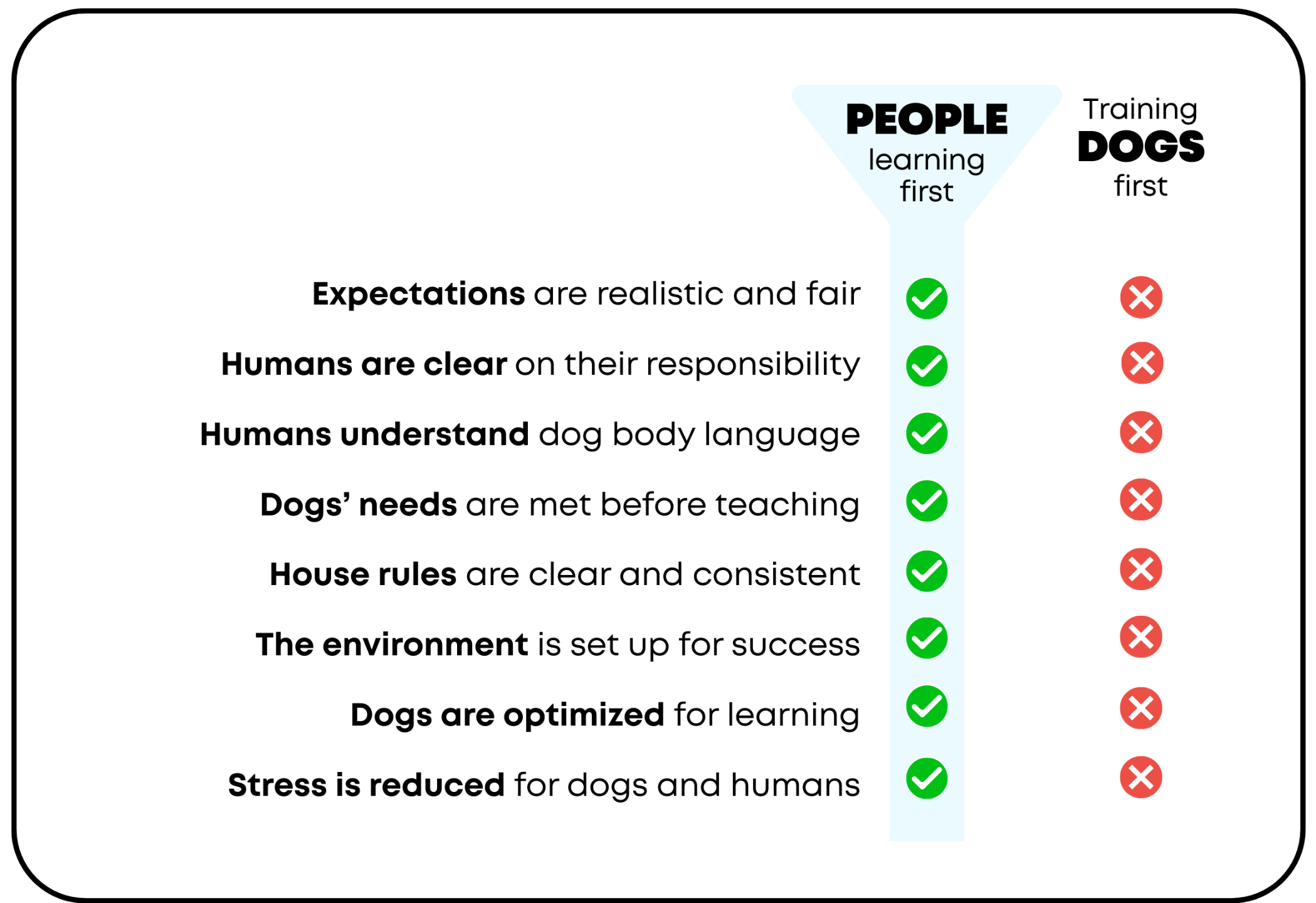
We’ve been focusing on asking dogs to behave - instead of taking a hard look at how we’re expecting them to live. The truth is, when it feels like our dogs are giving us a hard time, they're actually having a hard time.
But why is it especially tough for them NOW?

The answer is clear when you compare life today versus just 50–100 years ago.
Back then, dogs got to be dogs.
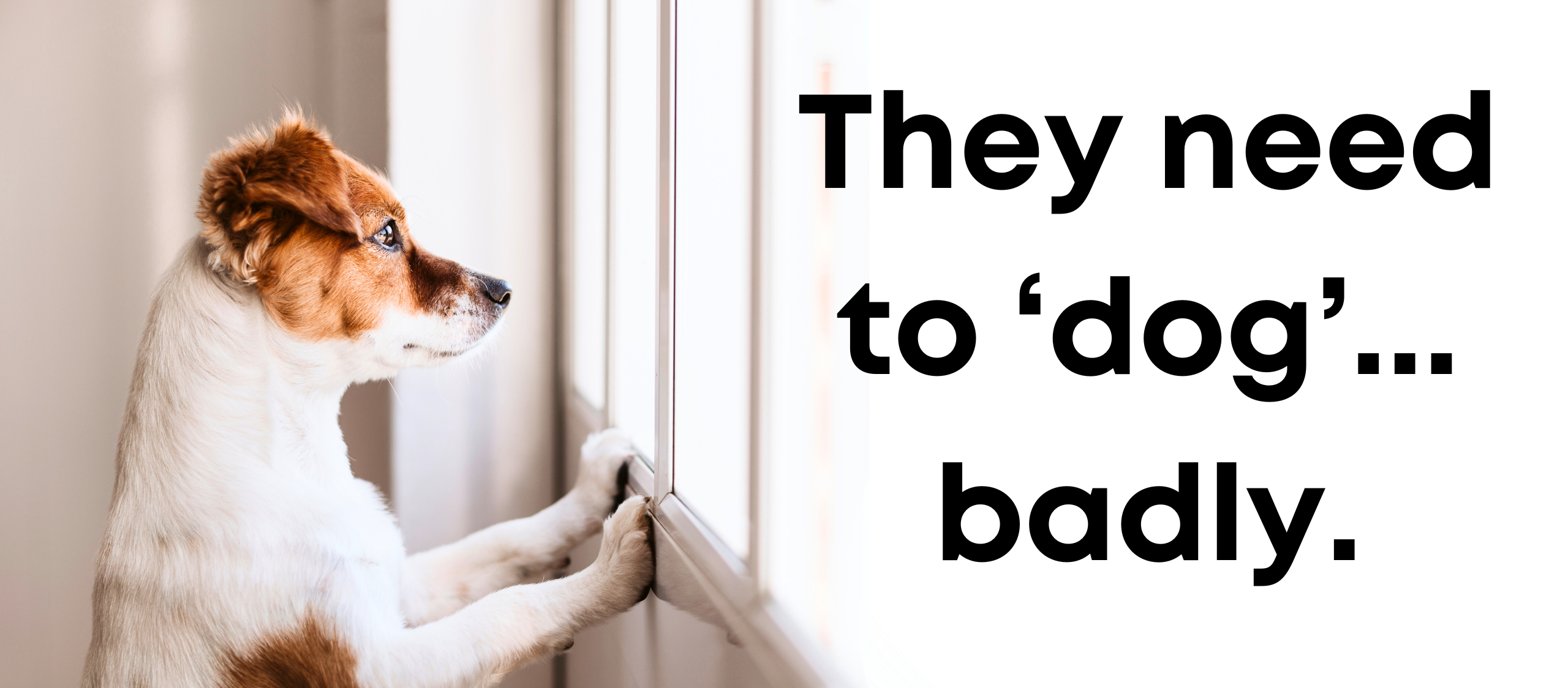
They wandered. They explored. They chose where to nap, who to hang out with, and how to spend their time. They burned energy naturally, and had more freedom and more opportunity to regulate themselves.
Their relationship with people was simpler, too.
It wasn’t about perfect behavior or performance — it was about sharing space and figuring things out together, with respect for the fact that they were dogs. If a child was growled at, "What did you do?’” was the question that always immediately followed.
Fast‑forward to today - and most dogs live very different lives.
Being outside most of the day has been traded for a few quick walks around the block - with possibly hours alone. And because we’re stretched so thin, we desperately need dogs to be on their best behavior, and to ‘fit in’ with our busy lives and schedules.
This means that many dogs go through their entire day with very few chances to make any real choices of their own. And without space to run, dig, bark, and explore...
natural behavior starts to look like 'behavior problems'.
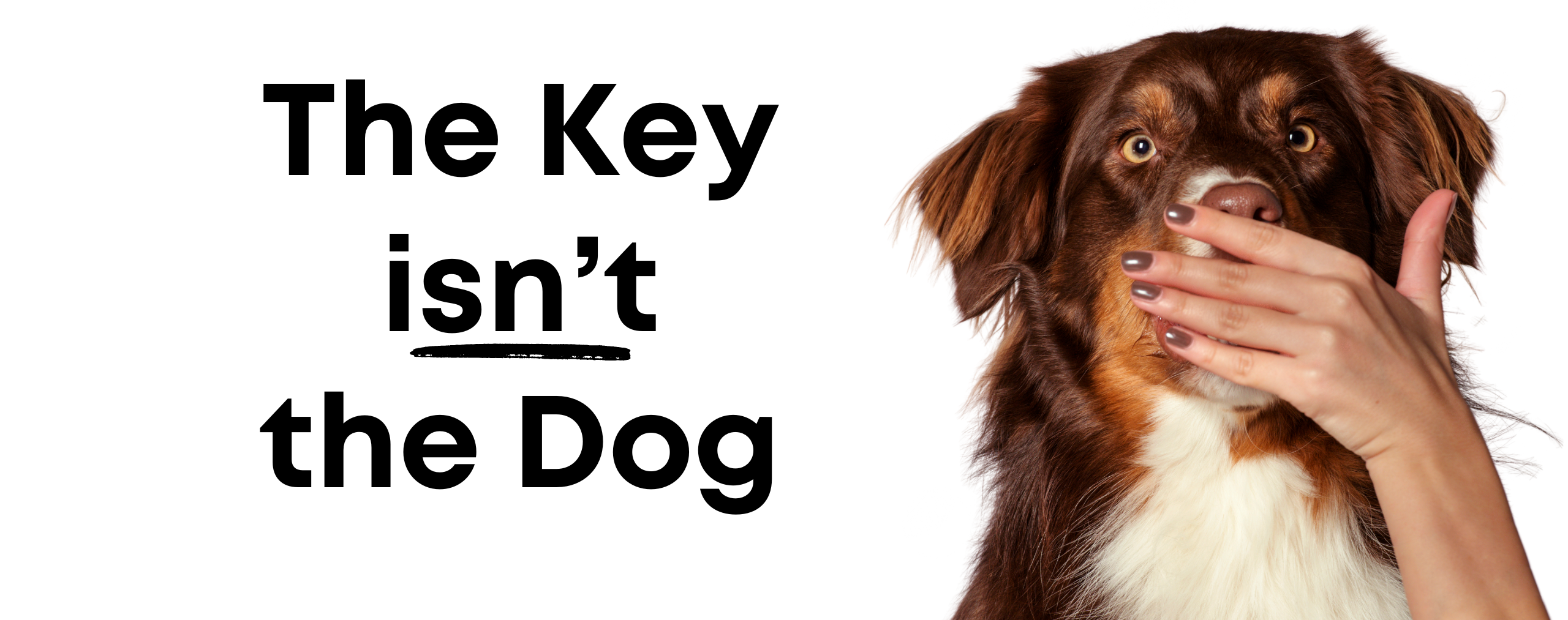

When we jump straight to training we're missing a LOT.
Because everything actually starts with the humans - we're holding ALL the cards.
We control almost every aspect of our dog's life.
We decide what they eat, when they pee, whether they can sniff, sleep, or play with friends, and how long they’re left alone. We choose the house, the routine, the pace, the rules — and then sometimes judge them when they struggle in the world we've created.
But flip that for a second.
If we're shaping their world, imagine all the positive change we could make... before any training begins.
It's something we automatically do with children.
We don’t "train away" behaviors we don’t like — we level up our skills and create the space for them to shine. Trouble sleeping? Blackout blinds. Frustration getting dressed? Elastic waists and slip-on shoes. First day of school nerves? We walk them in, stay nearby, and make sure they’re not facing it alone.
We tilt the world in their favor.
Clearly, dogs aren’t kids — but they are our dependents and we're all they have.
They're depending on us to have our side buttoned-up first.
Instead of trying to control or correct natural behavior, we can create environments where our dogs can feel safe, understood, and primed to learn. In fact, the best way to find the "dream dog" is by being the "dream human" raising them.
The quickest way to get there is The Dial Method® — a science-backed video, that's bingeable in just 40 minutes.
What Changed for One Family:
A family with a young child had an Australian Shepherd who had become reactive. He had nipped at the child a couple of times, and was guarding food. The family called a pro - in desperate need of help...
Their trainer recommended The Dial Method®. And just by watching video and filling out the workbook (zero dog training) the family were able to get a whole new lens on their dog’s world.
Life had changed — a family member had moved out, the dog’s buddy had died, and stress was building.
A fresh perspective and some human tweaks later - and the family reported an 85% improvement in the dog's behavior at home.
Same dog. Same house. New expectations. Whole new direction.
What if the missing piece isn’t more training?
Learn the four human skills that change everything — for your dog (and you!)
Get your FREE guide